Watch with Pip
A guided explanation introduces the idea and shows what to try.
The Atlas
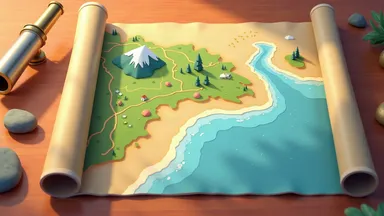
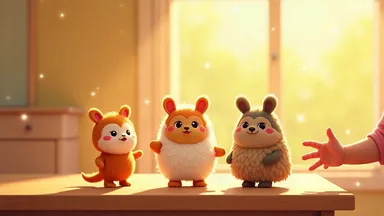
Not a picture of one — a real world they can unfold on the table: a map, animals that belong on it, a flag and money, a legend, a deck of cards you play, and a film that flies over all of it.
Start with just $1. One lesson to keep. No automatic subscription. Explore all 18 lessons ↓

Watch, try, and create inside CreatorKids. No separate AI accounts to set up.
START WITH SOMETHING SMALL — $1
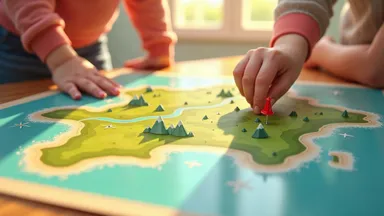
Decide where a country's first town goes before anyone explains why, then make the land your own country sits on.
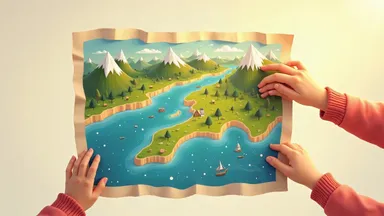
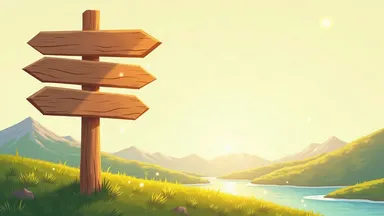
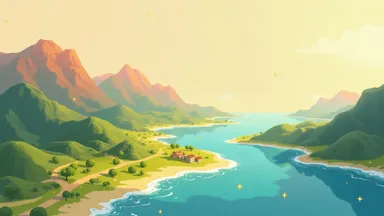
Your land, seen from above - sea, mountains and one big river - with the spot where the first town has to go, and a name for now
That is the first step — not yet a country in a box: a map, a flag, twelve playable cards, a legend told aloud, and a travel film. The whole course is 18 lessons for $14.99, and your $1 counts toward it.
Explore the $1 starting optionGUIDANCE, WITH ROOM TO TRY
A guided explanation introduces the idea and shows what to try.
Use the course tools to experiment, make choices, and try again.
Keep building their project, with something new to show you.
WHAT THEY WORK TOWARD
Six weeks to build a country that isn't there — its land, its creatures, its flag and money, its legend, a deck of cards you can play, and a film that flies over the whole thing.
TAKE A LOOK INSIDE
18 lessons. Open any lesson below to see what they will do.
A piece of land nobody lives on, and you decide where the first town goes - before anyone explains anything. Today you find out that every country starts with its water, and you make the land your own country sits on for the next six weeks.
They finish with: Your land, seen from above - sea, mountains and one big river - with the spot where the first town has to go, and a name for now
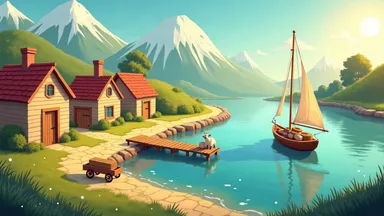
The first boat ever arrives on your land. Where it ties up decides everything that comes after - the first street, the market, the bridge, the wall. Today you watch a town grow in four pictures, then put your own capital on your own map.
They finish with: Your capital, on your own map, where the river meets the sea - with its jetty, its first street and its bridge
Nothing to make today. Your country takes its first test, and you are not the one taking it - somebody in your house is. You explain your map without ever pointing at the town, and then you watch where their finger goes.
They finish with: A map that somebody else could read - tested on a real person - and the one thing you changed because of what their finger did
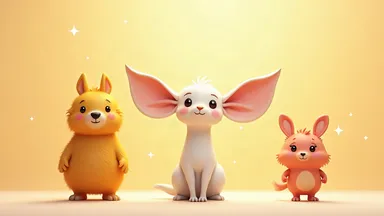
Your country has nobody living on it yet, and today that changes - but not with people. You design an animal nobody has ever seen, and you start where a real animal starts: not with how it looks, but with the job its body has to do.
They finish with: One invented animal that belongs on your map, and the three answers its body was built from
One animal is a start. A country needs more than one - and here is the secret: an animal from the snowy mountains and an animal from the hot plain should look like complete strangers, because they are solving completely different problems. Today you make two more, and you give one of them a size.
They finish with: Three creatures, one for each of three places on your map, and one of them shown next to something that gives it a size
Nothing to make today, except maybe one small fix. You take your three creatures to the youngest person you can find - a little brother, a cousin, a neighbour's kid - and you watch which one they reach for. Little kids cannot be polite about it, and that is exactly why they are the best judges you will ever have.
They finish with: Your three creatures tested on a real young child, and the one small change you made because of what they did
Here is a secret hiding in plain sight: the name of almost every town you know is a tiny description of the place, worn smooth by hundreds of years of people saying it. Today you crack the code - and then you invent your own, and start naming your country.
They finish with: Your own naming rule, and the first few places on your map named by it
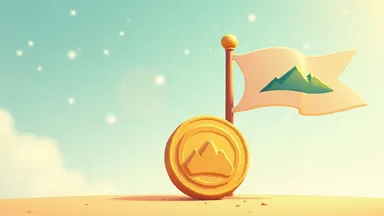
Two symbols today. A flag, where every single part means something - no decoration, all meaning - and a coin, where you work out the thing nobody ever explains: what money is actually worth. By the end you will know exactly what a loaf of bread costs in your country, and why.
They finish with: A flag for your country where every part has a meaning, and the worth of your coin worked out against a real day
Your naming rule has only ever been tested by you - and you made it, so of course it sounds right to you. Today somebody else uses it. You hand them your rule, they name a brand-new place, and you listen for one thing: does it sound like it belongs on your map, or did it just wander in from somewhere else?
They finish with: Your naming rule tested on another person, and the one way you sharpened it so a stranger could use it
Every country has one story that everybody in it knows - and the best ones end by explaining something you can still see today. A hill shaped like a sleeping giant. An island that was a dropped stone. This week you write your country's legend, and it starts by stealing a shape that has worked for a thousand years.
They finish with: The plan for your country's legend: the problem, the attempts, and the mark it left on your map
Your legend is old - hundreds of years old, inside your country. So it should not look like a bright new cartoon. Today you draw the one biggest moment of your legend the way old stories were really printed: carved lines, two inks, worn paper. The style does half the work of making it feel ancient.
They finish with: The one biggest moment of your legend, drawn in an ancient woodcut style
A legend is spoken long before it is ever written down. So today your legend gets a voice - you design the storyteller, the warm old voice that starts with 'long ago' - and then you do the oldest thing in the world: you tell the story to your family, and you watch their faces for the exact moment they lean in.
They finish with: A storyteller's voice for your legend, and the exact moment your listeners leaned in
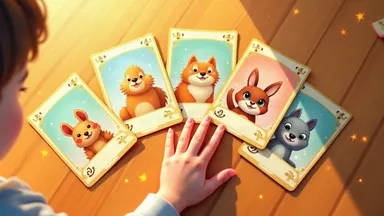
Those animals you made in week two are about to become a game you can actually play. But first, the single most important idea in game design, and it is sneaky: a card that can do anything is boring. The fun lives in the trade - and today you learn to build it, by making a card too strong on purpose and watching what it does.
They finish with: The rule of your deck - what every card shares and spends - and one card built too strong on purpose
Now you make them for real. Your creatures from week two become cards - each one spending its budget its own way, a name, a body, and one trick. The app keeps the sums fair for you, so you can spend all your thinking on the fun part: what makes each creature feel different to play.
They finish with: The first cards of your deck, each built from one of your creatures, each spending its budget its own way
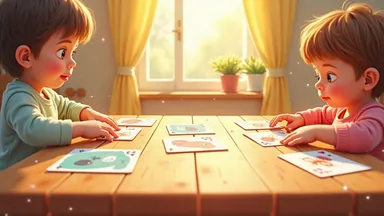
A game is not finished when it is made. It is finished when somebody plays it. Today you print your deck, teach the rules to a real person, and actually play - and then you do the thing that turns a maker into a designer: you change exactly one rule, play again, and see if the game got better.
They finish with: Your deck, played with a real person, and the one rule you changed because of how the game actually went
The last week, and the biggest payoff: a film that flies across your whole country, with your voice telling us where we are. Everything you have made is about to become one four-minute journey. Today you learn how a real travel film is built - and you choose the eight shots that make yours.
They finish with: The eight shots of your film, chosen and put in the order a viewer will travel through them
A still picture with the right camera move stops being a picture and becomes a flight. Today you give each of your eight shots one move - and the secret is that a move is not decoration, it is a sentence. Push in means arriving. Pull out means the big reveal. The move tells the viewer how to feel before you say a word.
They finish with: A camera move on each of your eight shots, each one chosen for what that shot is doing
Six weeks ago you had an empty piece of land. Today you press play on a film that flies across a whole country you built - its map, its creatures, its legend, its voice. Then you do the bravest and most useful thing any maker ever does: you sit your family down, you watch them watch it, and you find out what your country is really about.
They finish with: The finished film of your country, premiered to a real audience - and what they said it was about
TOOLS, SAFETY & PRIVACY
You pay, then choose a password. Your child signs in with a first name and, if you want, an age range you pick from a short list. Never a surname, date of birth, school, address or photograph.
Their pictures, notes and projects are in their portfolio, open to you whenever you are signed in. Ask us and we will show you everything we hold, delete all of it, or stop collecting more.
What your child types is run through a safety filter before it reaches the image tool, and the picture is checked again when it comes back. Pictures are only ever shown to a signed-in member of your family — a link on its own is not enough.
The tools run on our server, on our account. Your child never signs up with an AI provider, never agrees to anyone else’s terms, and nothing they type is attached to an identity outside CreatorKids.
What they type and make is kept so a person can review it for safety. It is not used for advertising, profiling, or training any model. No advertising cookies and no third-party trackers run anywhere your child goes.
Creations and portfolio stay while your account is open and for 30 days after you close it. Safety logs are kept for 12 months. If we ever change what we collect, we email you first.
The full detail, in plain words: our privacy policy.
A FEW THINGS PARENTS ASK
No. Each lesson shows what to do before asking them to try it, and they type descriptions in their own words. The tools are inside the lesson, with nothing to set up.
No. Lesson 1 is the first building block: they finish it with your land, seen from above - sea, mountains and one big river - with the spot where the first town has to go, and a name for now. A country in a box: a map, a flag, twelve playable cards, a legend told aloud, and a travel film is what the whole 18-lesson course works toward, and it comes together in the final lesson.
No. It is one payment of $1 for Lesson 1, yours to keep and replay. Nothing renews and there is nothing to cancel. Only the membership renews, monthly, and only if you choose it.
No. The guided AI tools and activities used in this course are inside CreatorKids. You do not need a separate AI subscription. Included image allowances apply; they are not unlimited.
Yes, and they are sized for the course. Lesson 1 includes 15 pictures. The full course includes 100, which never expire. Membership includes 120 a month across the whole library. Running out never takes the course away — only making new pictures pauses, and you can top up from the parent page.
Yes. It runs in the web browser with nothing to install, on a laptop, Chromebook or tablet; a larger screen gives the activities more room.
You handle the purchase and the two-minute set-up. After that the lessons are written for a child to follow on their own, at the pace of the video, with a trusted adult nearby for questions. Some activities invite a family conversation, and the end of the course is something they will want to show you.
Your $1 buys Lesson 1 to keep and replay. Nothing renews automatically. If you choose the full course later, that payment is credited and the upgrade is $13.99.
Start with one lesson for $1, buy this whole course for $14.99, or choose library access for $19.99/month. The first two are one-time purchases. Membership renews monthly until you cancel.
Yes. The yearly option is $149/year for the same library access. You can compare it with the monthly option on the membership page. Membership access continues through your paid period if you cancel; separately purchased courses remain yours to revisit.
No. Lessons are self-paced. Pause for an activity, replay an explanation, and come back when it suits your family. A course you buy outright is yours to keep; membership access lasts while subscribed.
Something else on your mind? Ask us.
THEIR NEXT “LOOK WHAT I DID” MOMENT
Begin with $1, choose the whole course, or explore together with membership.
First lesson: one payment. No automatic subscription.