Understand the basics
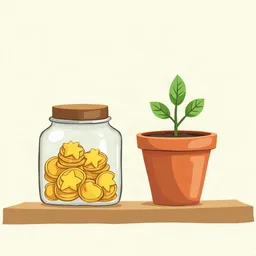
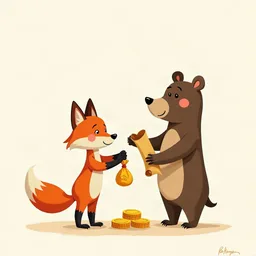
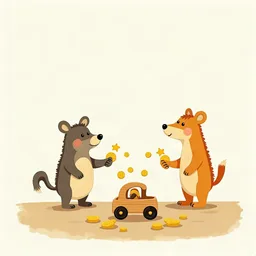
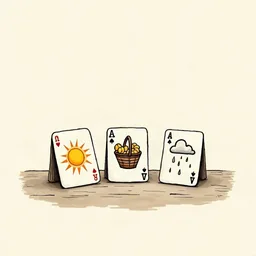
Explore saving, owning part of a business, lending, and funds through simple examples.
Understanding Investing
What does investing mean? How can money grow—or lose value? Friendly examples and hands-on activities help your child explore the answers, using make-believe coins.
Start with just $1. One lesson to keep. No automatic subscription. Explore all 12 lessons ↓

Videos, guided activities, and a place to think things through. No extra AI purchase.
SMALL STEPS. USEFUL DISCOVERIES.
Explore saving, owning part of a business, lending, and funds through simple examples.
Work out how changing prices, fees, and risk can affect what someone keeps.
Compare offers, explain a choice, and know when to ask a trusted adult for help.
START WITH SOMETHING SMALL — $1
Your child gives three coins different jobs and considers when each one will be needed. It is a small, practical starting point for understanding saving and investing.
Three coins given three jobs, and the question that decided each one
The whole course is 12 lessons for $9.99, and your $1 counts toward it.
Explore the $1 starting optionGUIDANCE, WITH ROOM TO TRY
A guided explanation introduces the idea and shows what to try.
Explore examples, work through an activity, and explain their thinking.
Keep their work and talk about what they discovered with you.
WHAT THEY WORK TOWARD
Worked examples, questions to ask, and a five-part practice plan. In the final lesson, they revisit that plan after a difficult year and explain what they would reconsider.
TAKE A LOOK INSIDE
12 lessons. Open any lesson below to see what they will do.
Three jobs a coin can do, and the one question that decides which — asked before anything is explained.
They finish with: Three coins given three jobs, and the question that decided each one
A receipt and a certificate look like paperwork. Only one of them makes you an owner — and owning is smaller than it sounds.
They finish with: An ownership card: what the holder owns, how a benefit could arise, and one uncertainty
The other thing you can do with coins. There is a promise attached, which sounds safer — and a promise is only as good as whoever made it.
They finish with: A lending card: what is owed, what arrives, and what could go wrong with it
One thing you can buy that holds lots of things. Useful, ordinary, and absolutely not magic.
They finish with: A fund card: what is inside it, and what its value depends on
A price on a tag is not coins in your hand — and that gap is where most arguments about money come from.
They finish with: Three worked price paths, with the gain or loss on each and whether it was sold
Two tens do not make twenty. Find out where the extra coin comes from — and then watch the same trick work in reverse.
They finish with: Two paths side by side: what growth did, and what the child put in
Every advert shows you two cards. This lesson is about the third one, the one nobody laid on the table.
They finish with: Two questions to investigate before deciding, written against a real goal
Three businesses, one beach. Counting the names is not the same as spreading the risk — and spreading it does not make losing impossible.
They finish with: One portfolio annotated under two different events, with what spreading did and did not change
Your pile got bigger and it buys less than it did. Nothing was stolen. This is the one nobody explains to children.
They finish with: A pile that grew and bought less, worked out in whole art kits
A small charge, taken quietly, every time. Here is how to find it and what it does to a number that looked fine.
They finish with: Two offers with the same headline and different after-fee results
One word, doing an enormous amount of work. Here is the calm, unexciting way to check it — and why a beautiful advert proves nothing at all.
They finish with: Two offer cards compared, with the missing fact named and a question for a trusted adult
Eleven lessons, five parts, one plan — and then the thing nobody plans for happens, and you find out whether your reasons still hold.
They finish with: A five-part plan, a downturn survived, and one claim about investing they would now question
IS THIS THEIR NEXT ADVENTURE?
For curious children who are starting to ask how money works. The course introduces ideas step by step, with simple arithmetic and space to work things out.
Start together, follow their curiosity, and give them time to try things out.
TOOLS, SAFETY & PRIVACY
You pay, then choose a password. Your child signs in with a first name and, if you want, an age range you pick from a short list. Never a surname, date of birth, school, address or photograph.
Their answers, notes and activities are in their portfolio, open to you whenever you are signed in. Ask us and we will show you everything we hold, delete all of it, or stop collecting more.
What they type and make is kept so a person can review it for safety. It is not used for advertising, profiling, or training any model. No advertising cookies and no third-party trackers run anywhere your child goes.
Creations and portfolio stay while your account is open and for 30 days after you close it. Safety logs are kept for 12 months. If we ever change what we collect, we email you first.
The full detail, in plain words: our privacy policy.
A FEW THINGS PARENTS ASK
No. The course uses fictional coins, companies, and funds. There are no real investments, brokerages, or trading accounts. Growth rates are practice numbers, not promised returns. It never asks about your family’s finances. Finishing the course does not mean a child is ready to invest real money independently.
No. Each lesson explains the idea with examples before the activity, and nothing asks them to operate an AI tool — the course is about understanding, not driving one.
A complete lesson — the video with Pip, its activity, and three coins given three jobs, and the question that decided each one. It is the first of 12, and the rest of the course builds on it.
No. It is one payment of $1 for Lesson 1, yours to keep and replay. Nothing renews and there is nothing to cancel. Only the membership renews, monthly, and only if you choose it.
No. This course’s videos and interactive activities are inside CreatorKids. You do not need to buy an AI tool or open an outside AI account.
Yes. It runs in the web browser with nothing to install, on a laptop, Chromebook or tablet; a larger screen gives the activities more room.
You handle the purchase and the two-minute set-up. After that the lessons are written for a child to follow on their own, at the pace of the video, with a trusted adult nearby for questions. Some activities invite a family conversation, and the end of the course is something they will want to show you.
Your $1 buys Lesson 1 to keep and replay. Nothing renews automatically. If you choose the full course later, that payment is credited and the upgrade is $8.99.
Start with one lesson for $1, buy this whole course for $9.99, or choose library access for $19.99/month. The first two are one-time purchases. Membership renews monthly until you cancel.
Yes. The yearly option is $149/year for the same library access. You can compare it with the monthly option on the membership page. Membership access continues through your paid period if you cancel; separately purchased courses remain yours to revisit.
No. Lessons are self-paced. Pause for an activity, replay an explanation, and come back when it suits your family. A course you buy outright is yours to keep; membership access lasts while subscribed.
Something else on your mind? Ask us.
THEIR NEXT “LOOK WHAT I DID” MOMENT
Begin with $1, choose the whole course, or explore together with membership.
First lesson: one payment. No automatic subscription.